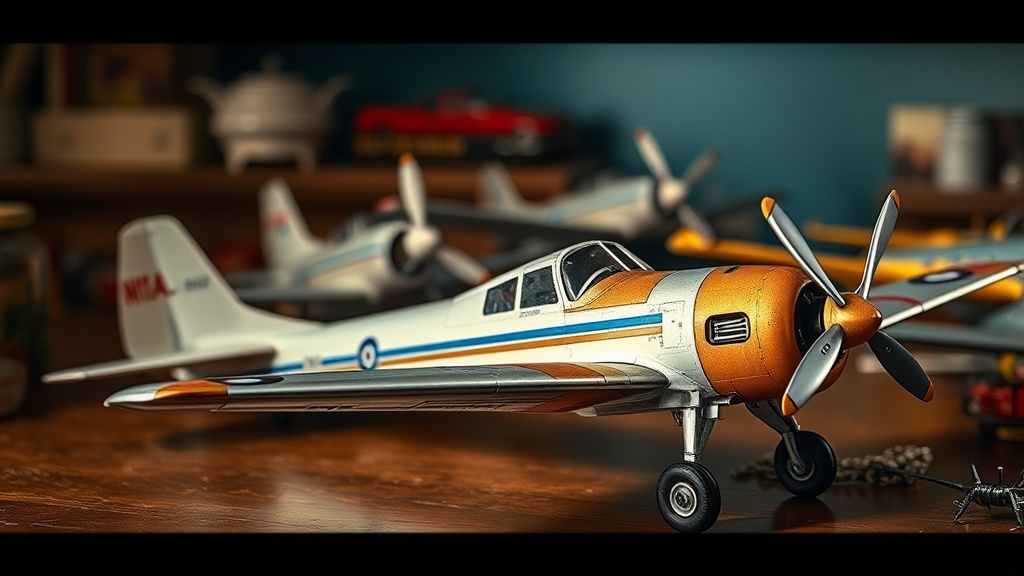
Preserving Your Vintage Airplane Model Collection: key Care Tips

This guide covers the practical steps for protecting vintage airplane models from dust, UV damage, humidity, and handling mistakes that can destroy decades of value. Whether you've inherited a collection or spent years building one, proper preservation isn't complicated—but it does require knowing what actually works versus what hobby store salespeople claim.
How Should You Store Vintage Airplane Models to Prevent Damage?
The best storage approach depends on your model's material, age, and current condition. Metal die-cast models from manufacturers like Corgi and GeminiJets face different threats than delicate wood-and-fabric museum pieces from the 1940s. Most collectors make the mistake of treating all models identically—and regret it later.
Here's the thing: temperature and humidity matter more than display cases. Models stored in basements or attics suffer the highest damage rates. The Smithsonian Museum Conservation Institute recommends maintaining 45-55% relative humidity for mixed collections. Above 60%, metal models develop corrosion and paint bubbling. Below 30%, wood and paper components crack and delaminate.
Ideal storage conditions include:
- Temperature: 65-72°F (18-22°C) — avoid anything above 75°F
- Humidity: 45-55% relative humidity
- Light exposure: Less than 150 lux for displayed pieces
- Air circulation: Gentle airflow prevents mold, but avoid direct drafts
The catch? Most homes fluctuate dramatically. A $30 AcuRite 00613 digital hygrometer positioned near your collection tells you when conditions drift. If humidity swings wildly (common in Asheville summers or any climate with seasonal variation), a eva-dry E-333 mini dehumidifier works for enclosed cabinets. For larger collections, the hOmeLabs 1,500 Sq. Ft. Energy Star Dehumidifier maintains stable conditions in dedicated rooms.
The Display Case Reality Check
Glass cases look professional. They're also dust traps with poor air circulation. Acrylic cases from Clearform or Plymor offer UV filtering (key—more on that below) and easier handling. Wood-framed cases with glass fronts? Beautiful, but verify the wood is sealed. Unfinished cedar or oak releases acids that yellow clear canopies and degrade rubber tires over time.
Worth noting: never stack models directly against case walls. Leave 2-3 inches for air movement. Rubber tires touching acrylic for years? They'll fuse. Place acid-free foam or silicone pads under landing gear—Archival Methods and Gaylord Archival make conservation-grade options that won't off-gas.
What's the Best Way to Clean Old Model Airplanes Without Causing Damage?
Never use commercial dust sprays, furniture polish, or compressed air cans held close. These cause more damage than the dust itself. The safest cleaning method combines soft brushes, low-suction vacuum attachments, and patience—applied in that order.
Start with a clean, dry Winsor & Newton Series 7 kolinsky sable brush (size 2-6 depending on model scale). Work from top to bottom, brushing dust onto a paper towel. For stubborn spots—decal edges, panel lines—use a bamboo skewer wrapped in microfiber, not cotton swabs (cotton catches and frays).
Here's the thing: liquid cleaning is where collections get destroyed. If a model requires more than dry dusting, distilled water on a barely-damp microfiber cloth (wrung until no drops fall) handles most surface grime. Apply to the cloth first—never directly to the model. Work in small sections, drying immediately with a second cloth.
| Cleaning Method | Safe For | Avoid On | Best Tool |
|---|---|---|---|
| Dry brushing | All materials, all eras | None | Kolinsky sable brush |
| Distilled water wipe | Metal, sealed wood, modern plastics | Unsealed wood, 1940s-50s decals | Microfiber cloth |
| White spirit (mineral spirits) | Metal, glass canopies | Plastics, rubber, paint | Cotton swab, minimal application |
| Isopropyl alcohol (90%+) | Glass, bare metal | Painted surfaces, clear plastics | Microfiber, quick application |
That said, some situations demand professional intervention. Mold on paper labels, flaking paint, or cracked clear coat? Contact a conservator. The American Institute for Conservation maintains a directory of specialists. Attempting DIY repairs on valuable vintage pieces—original Dinky Toys, pre-war Marklin, or signed limited editions—typically destroys more value than the repair saves.
How Do You Protect Model Airplanes from Sunlight and UV Damage?
UV light is the fastest killer of collectible value. Direct sunlight causes paint fading within months. Even indirect daylight—through windows, in well-lit rooms—accumulates damage over years. The Getty Conservation Institute has documented light damage to painted objects; model airplanes with their multiple paint layers and decals suffer proportionally worse fading than solid objects.
Protective measures fall into three categories: light source control, filtration, and model-specific protection.
Source control: Position displays away from windows. North-facing rooms (in the Northern Hemisphere) receive the least direct UV. If relocation isn't possible, UV-filtering window films from 3M Prestige Series or Vista block 99% of UV while maintaining visibility. Cost: $8-15 per square foot installed.
Filtration: Fluorescent and LED bulbs emit less UV than sunlight, but "less" isn't "zero." Avoid halogen track lighting entirely—it runs hot and emits significant UV. For displayed collections, Frame Destination and Tru Vue make conservation-grade acrylic with 99% UV blocking. Standard glass blocks roughly 45%—not enough for valuable pieces.
Model protection: Display cases should use UV-filtering acrylic or glass. If your existing cases don't, Clearshield UV-protective spray exists, though application requires practice—uneven coats create visible haze. Test on an inexpensive model first.
The Rotation Strategy
Even with protection, light exposure accumulates. Museums rotate objects on and off display; collectors can adapt this approach. Keep 60-70% of the collection in archival storage boxes (Gaylord's Metal Edge Textile Boxes work well for 1:72 and 1:48 scale models) and rotate every 6-12 months. This extends display life dramatically—and honestly, rediscovering stored pieces feels like acquiring new models.
What Handling Mistakes Destroy Model Airplane Collections?
Most damage happens during the moments models leave their shelves. Natural oils from skin transfer to surfaces, then attract dust and acids. A fingerprint on a matte-finish WWII bomber's fuselage can etch permanently into paint over years. The solution isn't gloves (awkward, often dirty themselves) but technique—and knowing when to stop.
Always handle models by their sturdiest structural points. For airliners, that's the fuselage midsection, not wings or tail. For WWII fighters with delicate antenna wires, support from below, never by the wings. Two hands, always—dropping a Hobby Master F-14 because you tried to lift it one-handed ruins the value and your afternoon.
Here's the thing about cleaning frequency: less is more. Every handling risks damage. A model displayed in a sealed, filtered case needs dusting annually, not weekly. The collector who "just wants to check" a model's condition monthly creates more wear than the environment does. Establish a handling schedule—maybe quarterly condition checks—and stick to it.
The Transportation Trap
Moving collections—whether across town or across the country—destroys more models than decades of display. Original boxes with custom foam inserts offer the best protection. If those disappeared years ago, Pelican Cases with Kaizen Foam (custom-cut to each model's silhouette) provide museum-grade transit security. Bubble wrap directly against painted surfaces? It leaves permanent texture impressions. Acid-free tissue paper as a barrier first, then bubble wrap, then a rigid container.
How Do You Maintain Value in a Vintage Airplane Model Collection?
Value preservation extends beyond physical condition. Documentation matters—original boxes, certificates of authenticity, and purchase records add 10-30% to resale value for limited editions. Store paperwork separately in acid-free sleeves (Print File Archival Preservers) to avoid acid migration from cardboard boxes.
Condition grading follows established standards. The Airliner Collectibles Association and similar organizations use Mint, Near Mint, Excellent, Good, and Fair—with "Mint in Box" commanding significant premiums. Be honest in assessments. A model with one tiny paint chip isn't Mint. Calling it such destroys credibility in collector communities (and communities—like the one Dante Ito has built in Asheville—remember).
Worth noting: restoration usually destroys value. A 1960s Revell kit built with 1970s paints and decals, yellowed and dusty, is worth more than the same model "restored" with fresh paint. Original condition—even imperfect condition—preserves authenticity. The exception: professional conservation that stabilizes deterioration without altering appearance. That's expensive ($200-500 per model) and only justified for genuinely rare pieces.
Photograph everything. High-resolution images—front, back, top, detail shots of any flaws—serve multiple purposes. Insurance documentation (standard homeowners policies rarely cover collections adequately; consider a Collectibles Insurance Services rider). Sales listings. And condition comparison—knowing whether that wingtip crack appeared this year or has been there for a decade.
That said, don't let preservation anxiety kill the joy. These models represent engineering achievements, historical moments, childhood memories. Display them. Handle them occasionally (carefully). The collector who wraps every piece in archival tissue and never looks at it again has preserved the object but lost the purpose. Balance protection with appreciation—it's the only approach that makes sense long-term.