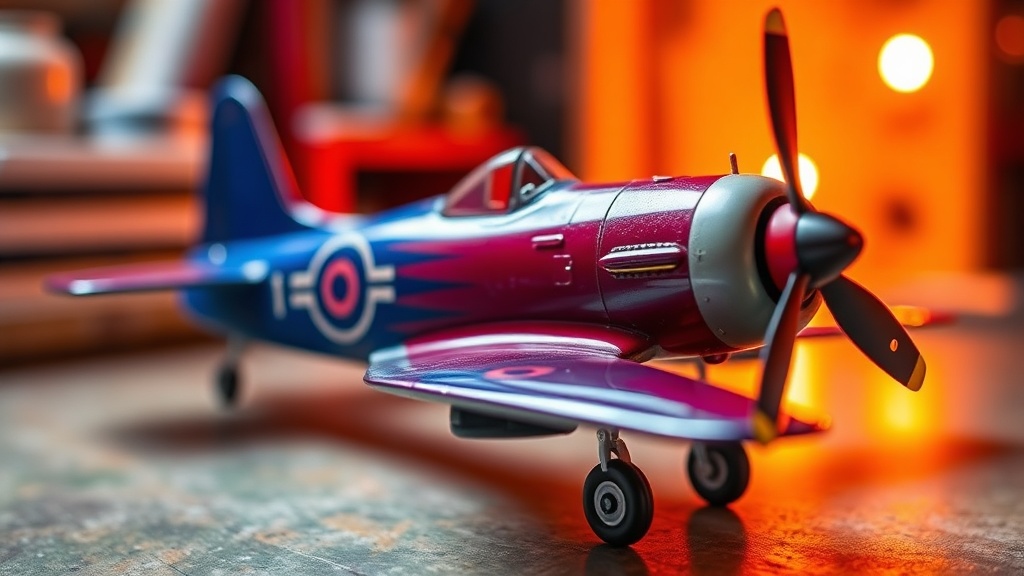
Preventing Paint Fade and Oxidation on Diecast Aircraft

Many collectors assume that once a diecast model is inside a display case, it is safe from the elements. This is a mistake. A display case doesn't just stop dust; it can also act like a magnifying glass for heat and light if you aren't careful. If you've ever noticed a slight dulling of the paint on a vintage 1:400 scale jet or a weird white film on a metal fuselage, you aren't just imagining things. Your collection is reacting to its environment. Understanding how to mitigate these chemical reactions is the difference between a lifelong heirloom and a piece of scrap metal.
How does UV light damage my collection?
UV light is the primary enemy of vibrant aviation models. Even if you aren't placing your models directly in a sunbeam, indirect sunlight—the kind that bounces off a white wall or a window—carries enough energy to break down chemical bonds in paint. This process, known as photodegradation, causes the colors to look washed out or "chalky." For collectors of high-end fashion-themed aviation models or limited edition liveries, this is a nightmare because the value is tied directly to the crispness of the graphics.
To avoid this, you should never place your display shelves opposite a window. If you must display near a light source, use LED bulbs that emit minimal UV radiation. Standard incandescent or older fluorescent tubes can actually be quite harsh on delicate pigments. You can find much better information on light-safe environments through resources like the Library of Congress preservation guidelines, which discuss how light affects various materials. While they focus on paper, the principles of light-induced decay apply to the pigments on your diecast planes too.
Common Types of Degradation in Diecast Models
It isn't just about color fading. There are two main types of damage you'll encounter as your collection grows:
- Pigment Fading: This is the loss of color intensity. It often starts with the brightest colors—reds and yellows are particularly vulnerable.
- Oxidation: This occurs when the metal alloy (often a zinc-based diecast) reacts with oxygen and moisture in the air. It can manifest as a dulling of the surface or, in extreme cases, actual corrosion of the metal parts.
If you notice a grainy texture on the surface of a wing or landing gear, you are likely seeing the early stages of oxidation. This happens most frequently in humid climates or when a model is stored in an unsealed container that traps moisture.
Can humidity affect the metal and plastic parts?
Humidity is a silent killer in the world of high-end collectibles. When moisture levels in the air are high, it creates a perfect environment for oxidation. This is especially problematic for diecast models because the metal can react with the moisture and the trace chemicals in the air. If your models have any exposed metal parts—like unpainted landing gear or nose cones—they are at high risk.
The goal is to maintain a stable, dry environment. A humidity level between 35% and 50% is generally considered safe for most collections. If you keep your collection in a basement or a room with poor ventilation, you're asking for trouble. Using a dehumidifier in your display room can prevent the moisture-driven oxidation that ruins the "pop" of a fresh-out-of-the-box model. You can check the National Weather Service for local humidity trends to see if your environment is working against you.
Managing Micro-Climates in Display Cases
A common mistake is thinking a sealed acrylic case is a permanent solution. In reality, if you seal a model inside a case with high humidity, you've just created a tiny, pressurized greenhouse. This can accelerate the degradation of the paint and the metal. Always ensure that your display cases are clean and dry before placing a model inside. If you use a case, consider adding a small silica gel packet (the kind found in shoe boxes) to the bottom of the case to absorb any residual moisture. Just remember to swap these out every few months.
What is the best way to clean a diecast model safely?
When it comes to cleaning, your instinct might be to grab a damp cloth. Stop right there. Water and moisture are the enemies of metal and paint. Even a tiny bit of moisture left behind can lead to oxidation or even rust on the internal mechanisms of the model. If you're dealing with dust, a soft, dry brush is your best tool. A high-quality makeup brush or a specialized anti-static brush works wonders for getting into the tight crevices around the engines and landing gear.
If a model is particularly dirty, you might be tempted to use a chemical cleaner. Please, don't. Most household cleaners contain abrasives or chemicals that can strip the clear coat or the paint itself. If you absolutely must use a liquid, use a specialized, non-streaking cleaner designed for delicate surfaces, and apply it to a cloth first—never directly to the model. This prevents liquid from seeping into the seams of the metal and the plastic, which is where the real damage happens.
| Problem | Potential Cause | Solution |
|---|---|---|
| Faded Colors | UV Exposure | Use UV-filtered glass/LEDs |
| Surface Dullness | Oxidation/Humidity | Dehumidifier/Silica Gel |
| Dust Buildup | Airflow/Poor Sealing | Soft Brush/Acrylic Case |
| Metal Discoloration | Moisture/Chemicals | Dry Environment/Avoid Liquids |
Maintaining a collection is an ongoing process of observation. You have to look at your pieces not just as static objects, but as evolving chemical structures. By controlling the light, the humidity, and the way you handle them, you ensure that your aviation models look exactly as they did the day you unboxed them.