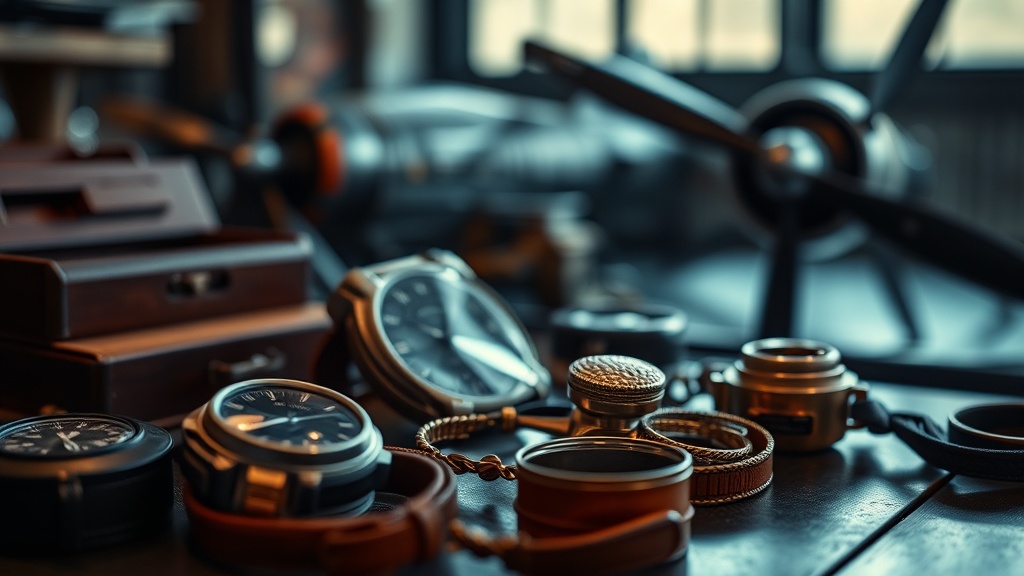
Selecting High-Value Aviation Memorabilia and Vintage Accessories

This guide covers the practicalities of identifying and acquiring high-value aviation-themed fashion collectibles and memorabilia. You will learn how to distinguish between mass-produced trinkets and pieces that actually hold value for serious collectors. We'll look at materials, provenance, and the subtle signs of quality that define a truly collectible item.
Collecting isn't just about grabbing whatever looks cool on a shelf. It's about understanding what makes a piece worth the investment. Whether you're hunting for a vintage silk scarf with specific aeronautical prints or a high-end leather flight jacket, you need a sharp eye. The market is flooded with replicas—items that look the part but lack the historical weight or material quality that drives long-term value. A real collector knows that the difference between a souvenir and a collectible lies in the details.
What Makes a Vintage Aviation Accessory Valuable?
Value in the fashion-collectible world is rarely about the item itself; it's about the story and the scarcity. A standard leather bomber jacket is just a jacket. A vintage, worn-in B-3 flight jacket with original sheepskin lining and documented history? That's a piece of history. When you're looking at high-end aviation accessories, pay attention to the hardware. Are the zippers heavy-duty brass or cheap plastic? Is the leather thick and durable or thin and flimsy? These physical traits often signal the era and the quality level of the piece.
Consider the manufacturer. In the world of aviation-inspired fashion, names carry weight. A scarf produced by a specific high-end textile house that used period-correct silk-printing techniques will always outpace a generic "aviation-style" polyester scarf. You're looking for craftsmanship that reflects the era's standards. If you find a piece with a manufacturer's label that matches a specific historical period, you've likely found something worth holding onto.
Materiality is everything. For example, when evaluating vintage metal pins or insignia, look for the weight and the patina. A piece that feels too light often suggests a modern, low-quality casting. You can find more information on how to identify high-quality metalwork through specialized numismatic or antique metal sites like Britannica to understand how metals age over time. The way a metal ages—the way it develops a natural patina rather than a forced "distressed" look—is a huge indicator of authenticity.
How Do I Verify the Authenticity of Aviation Memorabilia?
Verification is a process of elimination. You start by checking the obvious signs of a reproduction. Modern items often use synthetic blends or digital printing that lacks the depth of older methods. If you're looking at a vintage pilot's logbook or a flight jacket, look at the stitching. Hand-stitched or period-accurate machine stitching has a specific character that modern, high-speed industrial machines can't quite replicate. It's a subtle detail, but it's there if you know where to look.
Provenance is your best friend. A piece with a clear history—even if it's just a documented owner or a specific military unit—is worth significantly more than a piece with no background. If you're buying at an auction or from a private seller, ask for documentation. Does the item have an original box? Is there a certificate of authenticity? Even a simple, well-preserved original tag can drastically change the value of a fashion collectible. This is particularly true for high-end collaborations where the brand's own packaging adds to the overall piece.
Another way to verify is through comparison. Use reputable databases or auction archives to see how similar items have been described in the past. For instance, if you're researching the history of specific aviation brands, checking historical archives like the Smithsonian Institution can give you the context needed to see if a piece's design elements actually align with the era it claims to represent.
Common Pitfalls in the Aviation Collectible Market
One of the biggest mistakes is falling for the "distressed" look. Many modern companies create "vintage-style" items that are actually just new products made to look old. These are often made using chemical processes that look artificial upon close inspection. Real aging is uneven and organic. If a leather piece looks perfectly aged in every single corner, it's likely a modern imitation.
Another pitfall is ignoring the condition of delicate items. A vintage silk scarf might look beautiful, but if it has water stains or fraying edges, its value drops significantly. In the world of fashion collectibles, condition is king. Always inspect the integrity of the fabric and the strength of the seams before you commit to a purchase. A piece that is "too good to be true" in its condition might just be a modern reproduction.
Finally, don't ignore the small stuff. The buttons, the zippers, the embroidery—these are the parts that most often give away a fake. A high-quality vintage piece will have components that feel substantial and were built to last. If a "vintage" item has a lightweight, shiny zipper, walk away. It's a red flag that the piece wasn't built for the rigors of actual flight, which was the standard for the era it's trying to mimic.
| Feature | High-Value Authentic Piece | Low-Value Reproduction |
|---|---|---|
| Hardware | Heavy-duty brass, steel, or thick metal | Lightweight plastic or thin alloy |
| Textiles | Natural silk, heavy wool, or thick leather | Polyester, synthetic blends, or thin leather |
| Stitching | Dense, consistent, or period-accurate | Thin, uneven, or high-speed industrial |
| Aging | Natural, organic patina and wear | Artificial distressing or "perfect" aging |