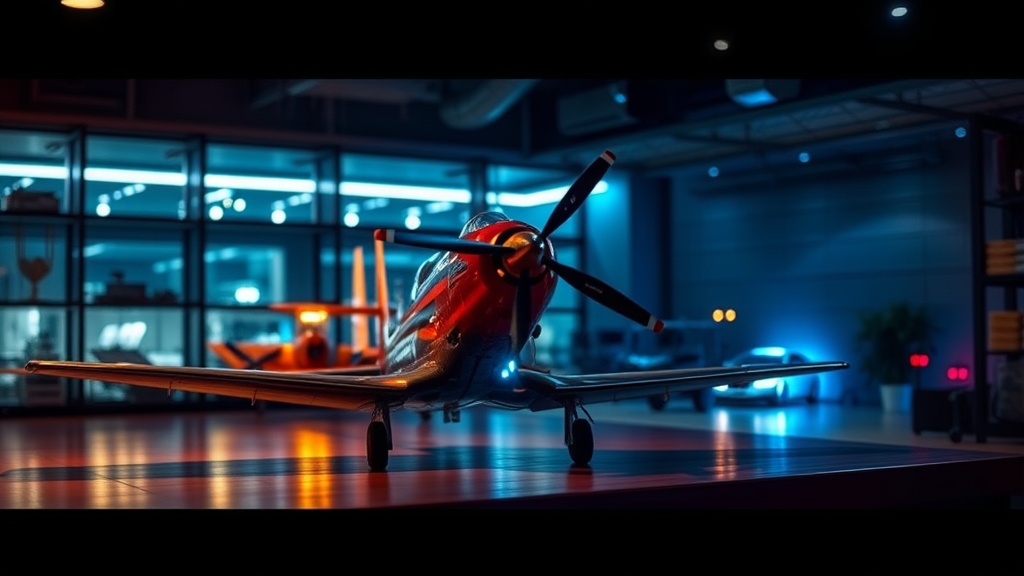
Setting Up a Custom Lighting Display for Your Aviation Collection

A single standard incandescent bulb produces enough heat to warp the thin plastic or resin-based wings of a high-end scale model within hours. Most collectors focus on the model itself, but the way you light it determines whether your collection looks like a professional museum exhibit or a cluttered shelf in a dark basement. This guide breaks down the technical requirements for lighting setups, from LED selection to heat management and wiring layouts, so you can showcase your aviation models without causing permanent damage.
What Type of Lights Are Best for Scale Models?
LED (Light Emitting Diode) lights are the only safe option for displaying aviation collectibles because they produce minimal heat and offer precise control over light direction. Unlike traditional bulbs, LEDs don't emit the infrared radiation that can cause a die-cast model to expand or a plastic fuselage to deform. When you're dealing with high-value pieces, the goal is to provide clarity without heat-related degradation.
There are three main ways to introduce light into your display, depending on your budget and the complexity of your shelving. You'll want to choose based on how much "DIY" work you're willing to do.
- Strip Lighting: Best for long, continuous shelves or glass cabinets.
- Spotlighting: Ideal for highlighting a single "hero" piece, like a rare 1:200 scale Boeing 747.
- Micro-LEDs: Used for internal cockpit lighting or engine glow effects.
If you want to add internal illumination to a cockpit, you'll need to look into "SMD" (Surface Mount Device) LEDs. These are tiny, often no larger than a grain of salt, and can be tucked into a scale cockpit with minimal visibility of the wires. It's a delicate process—one wrong move and you've ruined the visual integrity of the model—but the result is breathtaking.
For those who want to avoid any wiring altogether, high-quality battery-operated puck lights are an option. They're easy to install, but they often lack the professional, steady glow of a hardwired system.
How Much Does a Custom Lighting Setup Cost?
A professional-grade custom lighting setup for a single display case typically costs between $50 and $200, depending on whether you buy pre-made kits or build from scratch. The price varies wildly based on the level of control you want—specifically, whether you want a simple "on/off" switch or a dimmable system that can change color temperatures.
I've broken down the typical costs for different tiers of collectors below:
| Tier | Setup Type | Estimated Cost | Best For |
|---|---|---|---|
| Entry Level | USB-powered LED strips | $15 - $30 | Basic bookshelf displays |
| Intermediate | Dimmable 12V Transformer + COB LEDs | $50 - $100 | Dedicated glass display cabinets |
| Professional | Custom RGB/CCT Control + Micro-LEDs | $200+ | High-value museum-grade collections |
Don't overlook the cost of the power supply. A cheap, unbranded power adapter can flicker, and that flicker is incredibly distracting when you're trying to appreciate the fine detail of a 1:72 scale fighter jet. It's better to spend an extra $20 on a reliable, name-brand power brick than to deal with a buzzing, inconsistent light source.
One thing to keep in mind: if you're using a glass case, the light can reflect off the surfaces and create glare. This can make it hard to see the actual model. You'll want to angle your lights slightly away from the glass to prevent this. (I've spent way too many hours adjusting my own display angles to avoid this exact headache.)
How Do You Prevent Light Damage to Your Collection?
Preventing light damage requires a combination of using low-heat light sources and avoiding direct sunlight. UV rays are the silent killer of collectibles; they can fade the paint on a die-cast plane or make certain plastics brittle over time. Even if your LEDs are safe, if your display case is sitting in a sunbeam, your collection is at risk.
Here is a checklist to ensure your lighting is safe:
- Use LEDs exclusively: Never use halogen or incandescent bulbs in a display case.
- Check the Color Temperature: A "warm" light (2700K) looks great for vintage aircraft, but a "cool" light (5000K+) often shows the metallic sheen of modern jets better.
- Avoid Direct Sunlight: Position your display away from windows.
- Monitor the Heat: Even LEDs generate a tiny amount of heat at the base; ensure there is enough airflow around the power source.
If you're serious about the long-term preservation of your models, you might want to look into guidelines for light exposure. While these are often written for paper or textiles, the principles of UV protection and heat management apply perfectly to high-end aviation models. A model with a perfectly painted livery loses its value immediately if that paint begins to fade or crack due to poor lighting environments.
When you're setting up your lights, think about the "shadow play." If you place a light directly above a model, the bottom of the fuselage will be in total darkness. This makes the model look flat and cheap. Instead, try using two light sources at 45-degree angles to create depth and highlight the curves of the wings and fuselage.
It's worth noting that if you're displaying models with delicate parts, like thin antennae or landing gear, you should be even more careful with light placement. Intense light can create harsh shadows that actually draw attention to the flaws or the "emptiness" of the display. You want the light to enhance the model, not distract from it.
If you've been focusing heavily on the physical upkeep of your models, you might find my previous post on how to care for your fashion model collection helpful for understanding general preservation. While fashion models are a different niche, the principles of environmental control—light, dust, and temperature—are identical across all high-end collectibles.
The final step in any lighting setup is the "test run." Set up your lights, leave them on for at least 24 hours, and then inspect your models. Look for any signs of heat buildup or unexpected color shifts. If you see any discoloration or if the plastic feels warm to the touch, you need to change your setup immediately. A little bit of caution now saves a lot of money later.
Steps
- 1
Assess Your Current Display Space
- 2
Select Low-Heat LED Strips
- 3
Plan the Light Angles to Avoid Glare
- 4
Install and Test the Wiring