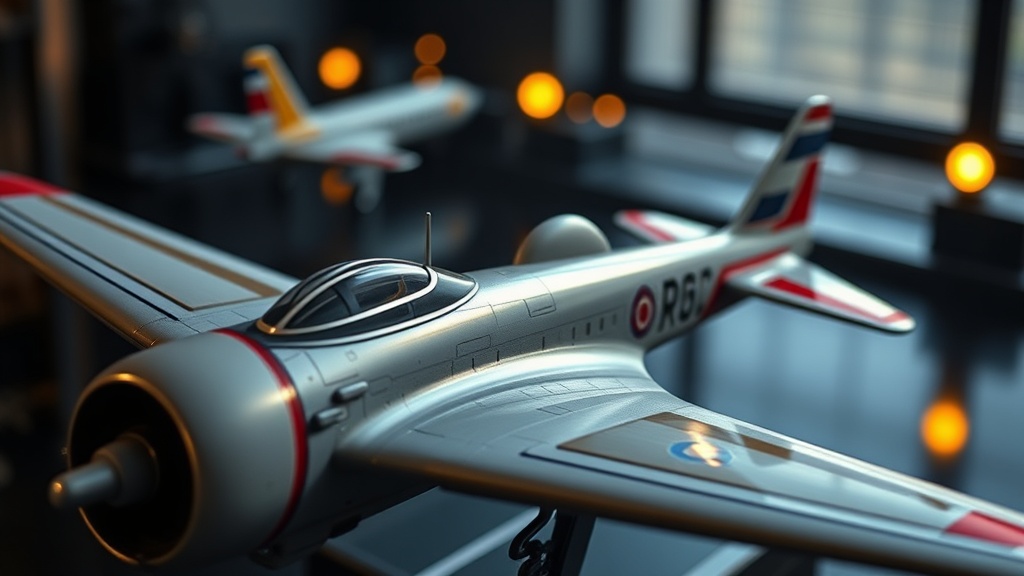
The Evolution of Scale and Detail in Modern Aviation Models

Have you ever wondered why a 1:200 scale diecast model looks so different from one bought a decade ago? This post examines the shift in manufacturing technology, the move from simple diecast metal to mixed-media resin, and how scale-specific detail has changed the collector's market. We'll look at how digital precision and new materials have redefined what a "premium" model actually looks and feels like.
How Has Technology Changed Aviation Model Production?
Advances in 3D scanning and CAD (Computer-Aided Design) software have transformed aviation models from "approximations" into exact replicas. In the past, model makers relied on physical molds that often lost detail over time. Today, manufacturers use high-resolution digital files directly from aircraft manufacturers to ensure every rivet and sensor is represented.
The biggest shift isn't just in the shapes, but in the precision of the parts. We've moved from heavy, chunky diecast metal to highly detailed resin and high-grade plastics. This allows for thinner wings and more realistic cockpit geometry. It's a massive difference when you're looking at a high-end model from a brand like Gemini Jets versus a generic toy-grade model.
Digital printing has also changed the game for livery application. We used to see "pad printing" that often looked slightly off-center or blurry. Now, UV printing and digital decals allow for microscopic precision. You can actually see the tiny registration numbers and airline logos that used to be a blurry mess. It’s a huge leap in quality—though it does make the counterfeits much harder to spot.
One thing to keep in mind: more detail doesn't always mean better quality. Sometimes, a model is so thin that it becomes incredibly fragile. If you're a collector who likes to move your pieces around, you might find these high-detail models a bit nerve-wracking. (I know I do.)
What Is the Difference Between Diecast and Resin Models?
The primary difference lies in the material composition and the level of fine detail achievable during the manufacturing process.
Diecast models are traditionally made from a zinc alloy (often called Zamak). They have a certain weight and "heft" that many collectors love. There's something satisfying about a heavy 1:400 scale Boeing 777 sitting on your desk. However, metal has its limits. It's difficult to cast extremely thin, tapered wings or complex engine geometries in metal without the part becoming brittle or losing its shape.
Resin models, on the other hand, are often used for larger scales or highly intricate shapes. Resin allows for much sharper edges and more complex-looking parts. Because the material is molded differently, you get much better "edge definition" on things like stabilizers and winglets. This is why many high-end 1:200 scale models are moving toward resin or high-density plastic.
Here is a quick breakdown of how these materials typically stack up in a collection:
| Feature | Diecast (Metal) | Resin / High-Grade Plastic |
|---|---|---|
| Weight | Heavy/Substantial | Lighter/Moderate |
| Detail Level | Good (Standard) | Exceptional (High-Precision) |
| Durability | High (Hard to break) | Moderate (More fragile) |
| Best Scale | 1:400, 1:200 | 1:200, 1:72, 1:200 |
If you're a collector who values the "feel" of a model, stick to diecast. If you want a piece that looks like a museum-grade miniature, look for resin. It's a trade-off between physical presence and visual accuracy. Worth noting: as the market moves toward more complex designs, many traditional diecast manufacturers are having to upgrade their toolsets just to keep up.
Why Does Scale Matter for Collector Value?
Scale dictates the level of detail possible, which directly influences the long-term value and desirability of the model. A 1:72 scale model will almost always have more visible detail than a 1:400 scale model, simply because there is more surface area to work with.
The scale you choose determines your storage needs and your budget. Small-scale models (1:400) are great for building massive fleets in small spaces. They are often more affordable and easier to mass-produce. But, as the technology for 1:400 has improved, the "premium" end of this scale has become very competitive. Brands are now squeezing incredible detail into these tiny-sized planes.
On the flip side, large-scale models (1:200 and up) are the heavy hitters. These are the pieces that often become centerpieces. Because they are more expensive to produce and require more material, they tend to hold their value better—provided the manufacturer is reputable. If you're looking to invest in a piece that might appreciate, you'll want to look at the scale model history of the specific manufacturer. Some brands have a history of producing "limited editions" that actually become quite rare.
I've seen collectors make the mistake of buying cheap, large-scale models thinking they'll hold value. That's a mistake. A large-scale model from a low-tier manufacturer is just a large-scale piece of plastic. True value comes from the intersection of scale, brand reputation, and the complexity of the livery.
If you're already building a collection, you might want to check out my previous thoughts on which collectibles actually hold value. It's a different way of looking at the market than just looking at the scale.
It's also worth considering the "collectibility" of the aircraft itself. A 1:200 scale model of a common Airbus A320 might be easy to find, but a 1:200 scale of a rare, vintage military transport or a specific historical livery will always command a higher price. The scale is the canvas, but the subject is the soul of the piece.
One thing I've noticed is that collectors often get caught up in the "bigger is better" trap. While a 1:20 scale model is impressive, it's also a massive commitment in terms of space and cost. It's often better to have a highly detailed 1:400 fleet than one mediocre 1:200 model. Quality over quantity is a rule that applies to almost every aspect of this hobby.
As we see more manufacturers utilizing 3D printing for prototyping, the line between "toy" and "collector model" continues to blur. We are seeing more "hybrid" models that use metal for the fuselage and high-detail resin for the wings and engines. This provides the weight of a diecast with the precision of a resin model. It's a winning formula for the modern collector.
Just remember to keep an eye on how you store these. With more detail comes more vulnerability. A tiny, perfectly painted winglet is a nightmare if it gets bumped during a dusting session. If you haven't already, you should read my guide on keeping your fleet dust-free to ensure these high-detail pieces stay in top shape.
The evolution of the aviation model is essentially a move toward total immersion. We're getting closer to the point where a model is indistively a replica of the real thing. Whether you prefer the heavy feel of metal or the sharp lines of resin, the options available today are better than they've ever been.